
Shutting down my startup
Lessons learned from starting and shutting down a venture-backed startup.

Eleven months ago, I set out to found and scale a startup. I’d spent the previous two and a half years working as a senior product manager on Spotify’s new products team and I was keen to leave Big Tech and do my own thing. I raised $350,000 USD, moved to London, and got going: startup glory awaited.
This post covers what I built, why I shut it down, and what I learned.
What I built
Over the past year, I researched and built prototypes for audiences in two problem spaces: compliance and mental health.
By “compliance”, I mean the legal, regulatory, and privacy practices a startup must have in place to sell their software to big companies. It’s very unsexy but very important: if your startup isn’t compliant, you’re not closing big deals. I liked that Getting Compliant was a critical and annoying problem many startups faced and I thought AI startups might have novel compliance needs unmet by current offerings.
Unfortunately, I found compliance crushingly boring1.
Unfortunately, I found compliance crushingly boring.
Keen to work on something I cared more about, I started learning about mental health tech. I know how debilitating and painful depression and anxiety can be, having experienced both and supported loved ones going through these and other mental health challenges.
I began by learning about what mental health providers needed ie therapists, psychiatrists. However, after talking to a lot of therapists, psychiatrists, and founders serving these segments I “pivoted” to consumers.2
I was interested in consumer mental health for two main reasons: I had first-hand experience with the problem I was trying to solve, and I’d worked as a consumer product manager for the previous eight years.
I’d spend the next few months zeroing in on a specific segment of users, digging into their needs, developing hypotheses to address those needs, and creating and testing prototyping to validate my hypotheses.
I wanted to create a kind of AI-enhanced human-to-human therapy that thoughtfully integrated voice-to-text, text analysis, and yes, generative AI, into conventional therapy. My goal was to make therapy vastly more effective and scalable while retaining the human element that I felt was critical for high-quality care.3
Soon I was making good progress. I had learned a lot from interviewing prospective users, talking with current and former founders in the space, and researching the market. I hacked together prototypes to test a few hypotheses, and after several iterations, was beginning to get positive feedback. I was excited. Things were moving.
Then, with six figures in the bank, I told my investors I was done, and began closing up shop.
Why I shut down my startup
When someone asks me why I shut down my startup, I usually tell them that I wanted to work on a team again. This is true, but incomplete.
The truth, which I normally don’t get into, is that I was miserable.
I’d begun so excited. No meetings! No slacks! No emails! I loved the freedom. I loved the founder community: getting to know, bond with, and learn from other founders. I loved the intellectual challenge: what do you do when you can do anything?
I’d begun so excited. No meetings! No slacks! No emails! I loved the freedom. I loved the intellectual challenge: what do you do when you can do anything?
However over time, it became a slog. I found the work isolating, disorienting, and draining. I felt pressure to “perform” the role of a startup founder. I felt like I had to be confident, happy, enthusiastic, and positive all the time. And, critically, I didn’t have the burning motivation and social infrastructure in place to keep going.
At the time, wrapping up felt like a colossal failure. I felt a deep responsibility to my friends, mentors, and investors to not quit, no matter what. As I considered closing up shop, I experienced a mini-identity crisis: if I wasn’t a founder, who was I?
Thankfully, with love and reassurance from friends, family, mentors, and yes, investors, I did stop. It turns out people that love you love you whether or not you’re a successful startup founder. Who knew.
Some stuff I learned
Well for one thing, I learned that sometimes the haters are right. The “haters”, in this case my beloved friends and family, questioned my decision to start a company and move to a new country, simultaneously, by myself, without a visa. I’m not saying I plan to listen to the haters in the future, per se. But going forward, if basically everyone who loves me is warning me about the same thing, I do plan to take that warning more seriously.
That being said, another key learning here is that failure is painful but survivable. I felt really bad telling my investors I was “quitting” after they’d invested in me and while knowing so many people would do anything to have the funding and opportunity I had. But I also learned that failure is survivable.4 Each time I do something scary and fail and see I’m still here, it gives me more confidence to do more scary things in the future.
I learned about identity, like how easy it is to tie your sense of self-worth and value to your work, and how painful doing so can be. This is a particularly tricky thing as a founder, I think. You get all these kudos for being a founder from some people, and a lot of skepticism from others, and every day can feel like a rollercoaster of highs and lows, sometimes hour by hour.
I learned that you can’t force yourself to work on something you’re not into it. At least I can’t. And in my humble opinion, the startup journey is so hard you need to be profoundly invested in and gratified by the journey itself since the destination (IPO?) is so far in the future and statistically very unlikely. Talking candidly with my founder friends, I’ve noticed different things motivate different people.
The most common motivations I’ve heard in private conversations are caring a lot about the people they’re building for, wanting to try building something big for the challenge of it, making a lot of money, working on cool tech, working with their cofounder, working on a problem they care about, regret minimization.
I learned it feels awkward and embarrassing to tell someone you’re a founder early on. Most of the time when I explained what I was doing, I’d watch someone’s eyes narrow as they looked at me with a mix of skepticism, disdain, and pity. Then again, maybe that’s just how British people look at you.
The most understanding and supportive audience, by far, was other founders. Invariably, after mumbling that I was an early-stage founder, founders were the ones to encourage me, no matter how little I had to show for it.
I learned how important it is to invest in interest, hobbies, and relationships outside of your startup. Honestly, I didn’t do a great job of this, but I think it would have helped a lot if I had. It didn’t help that I had just moved to a new country and had few close IRL friends there. Also, I recommend not dating someone at your co-working space. I know it sounds like a fantastic idea... see bae and make progress on your startup at the same time what could go wrong?? A lot, as it turns out.
I learned I needed to get off LinkedIn for a while. Seeing a constant stream of other people’s accomplishments and humblebrags isn’t that fun, in the best of times. When you’re wondering if you’re wasting your life on a startup dream that may or may not come to anything, these updates can be very bad for your mental health. I started using a Google Chrome extension called Newsfeed Eradicator that hid my LinkedIn Feed. That way I could still go on LinkedIn as needed without having to see my feed posts.
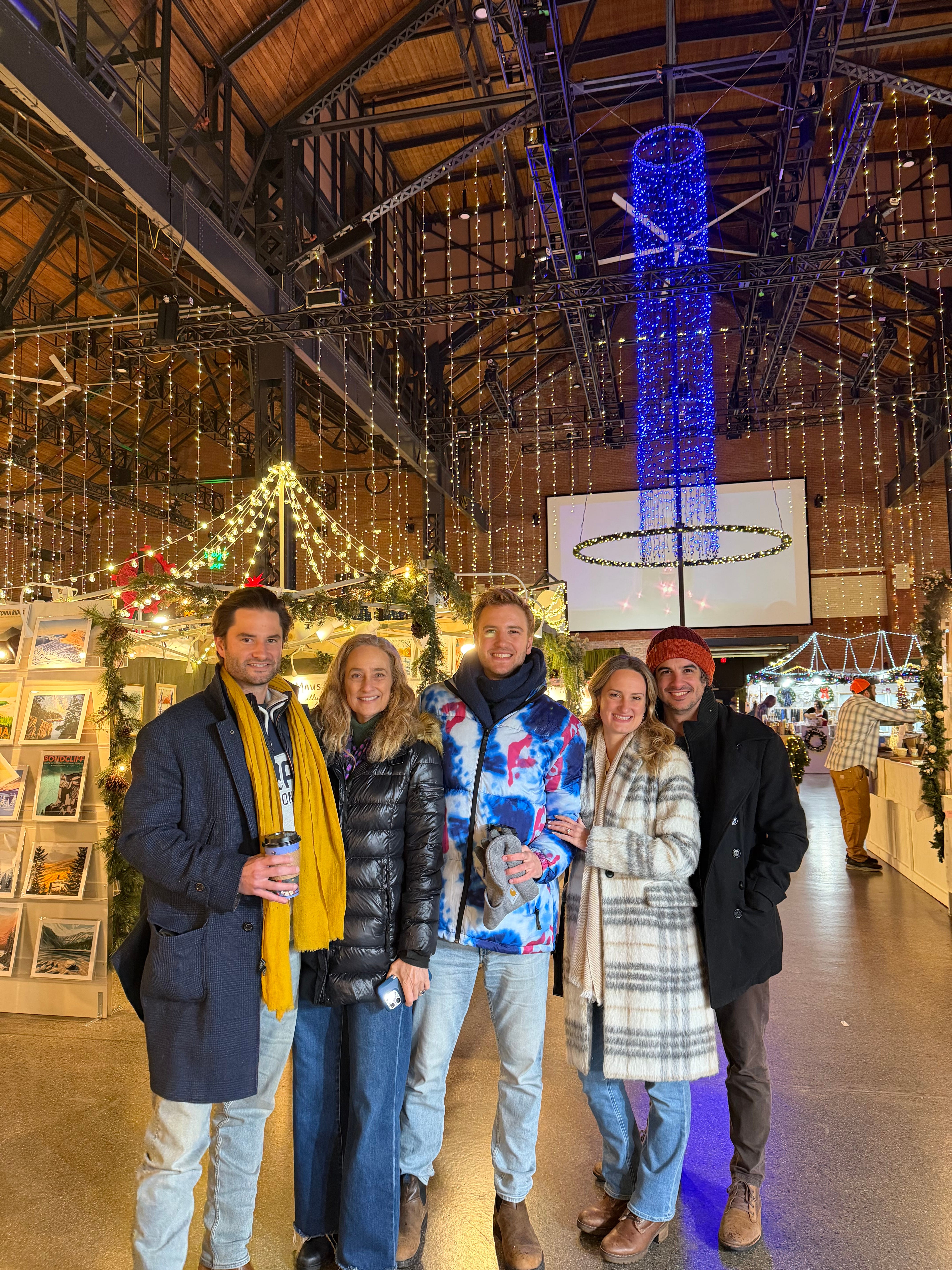
The most important thing I learned was that the people in your life who care about you care about you because of who you are, not what you accomplish. When you’re spending every waking second trying to make something work, it’s easy to forget this. At least, it was for me. Fortunately, in my lowest moments in 2025, I had family and friends there to remind me.
I’m proud I took the leap, gave it everything I had, learned a ton about starting a company, and moved on when I did. I’m grateful for the close friends and family members who were there for me in every high and every low.
What’s next
Right now, I’m keen to grow as a product builder. In a future post, I’ll share what I mean by that, why that is, how I’ve begun doing that, and how I plan to keep doing that.
For now, I’ll just say thanks for reading all the way to here! Let me know if anything resonated with you by replying to this email or dropping a comment.
Until next time,
Lachlan
I didn’t have “founder-market fit”. I wasn’t the right person to work on compliance: I had little to no first-hand experience with the problem space, and very little interest in the space. They Say you should be willing to work on your problem for 10 years. I believe different things can motivate and sustain you. After a few months of research, interviews, and consulting, I was dreading going to work. No startup is fun all the time, but no honeymoon period is, in my opinion, a serious problem. At least for me.
I was interested in mental health providers as a segment because I figured if I could help them deliver better care I could “scale” my impact on people struggling with mental health issues. Unfortunately, after learning more about the market, I didn’t find evidence to suggest there was something really different in that market to justify a significant new offering. I figured that meant I could either go super niche in my audience and/or offering or work on a secondary problem. Neither option appealed to me. I also had no experience building for mental health providers so felt I didn’t feel like I had a major advantage serving that market. Meanwhile, I had considerable experience as a customer of mental health services. I’ve gone to therapy for years and tried tons of mental health apps and techniques.
I did the whole shebang: needs, existing solutions to those needs, gaps, hypotheses, prototypes to test those hypotheses, interviews with customers to validate those hypotheses, learnings from those interviews, iterations on my prototypes, more interviews etc.
At least in the privileged life I lead.
Thanks to Jacklyn Oliver, Zach Esrig, and Liv Tylutki for reading earlier drafts of this post.
Loved the article and thank you for sharing your journey! Former PM here building in the physical food and bev space - a lot of the points you mentioned resonate :)
Thank you for sharing your journey! As a new founder, I am incredibly curious about what others are going through and key lessons learned. Way to stay true to yourself and take the next step in finding your "why!". There isnt a day that goes by without me questioning WTF am I doing, but my vision and my WHY grounds me! I am passionate about what I'm doing and it helps release the pressure of the outcome. Makes the unknown more comfortable. Again, I enjoyed reading your experience and wish you all the best!